Semiconductor leaders do not need to be reminded that the labor market is constrained. The pressure is visible in open requisitions, compressed ramp schedules, and increased competition for technical talent. The more important question is whether current hiring systems are built to scale when demand accelerates again.
A scalable workforce model is not defined by hiring volume during a strong quarter. It is defined by structural readiness sustained over time.
Signals That a Workforce Model Is Not Yet Scalable
Leadership teams can evaluate workforce scalability by asking:
- When demand accelerates, does time-to-fill expand disproportionately relative to production timelines?
- During ramp periods, does supervisor bandwidth become compressed in ways that introduce operational strain?
- Is onboarding consistency dependent on individual managers or site-level variation rather than a standardized framework?
- Does recruiting capacity need to be rebuilt each cycle, or does it remain structurally intact across market shifts?
- When expanding into new regions, are sourcing strategies engineered in advance, or assembled reactively once hiring begins?
If the answer to several of these questions reveals variability or delay, the issue is not recruiting effort, but structural design.
What Scalable Workforce Design Actually Means
A scalable workforce model integrates several components into a coordinated system:
- Capability-based evaluation that expands the addressable talent pool
- Sustained sourcing networks that remain active during slow periods
- Regional ecosystem partnerships aligned to long-term production plans
- Structured onboarding that reduces variance during ramp
- Flexible recruiting capacity that can increase without sacrificing standards
When these elements operate continuously rather than periodically, hiring becomes a controllable input rather than a recurring constraint.
Evaluating Structural Readiness
Semiconductor expansion is capital intensive and long-term. Workforce systems must be designed with comparable foresight.
Organizations that rely on rebuilding hiring engines each cycle will continue to experience ramp friction and operational strain during growth phases. Those that design workforce capability as infrastructure will enter the next surge with greater predictability and control.
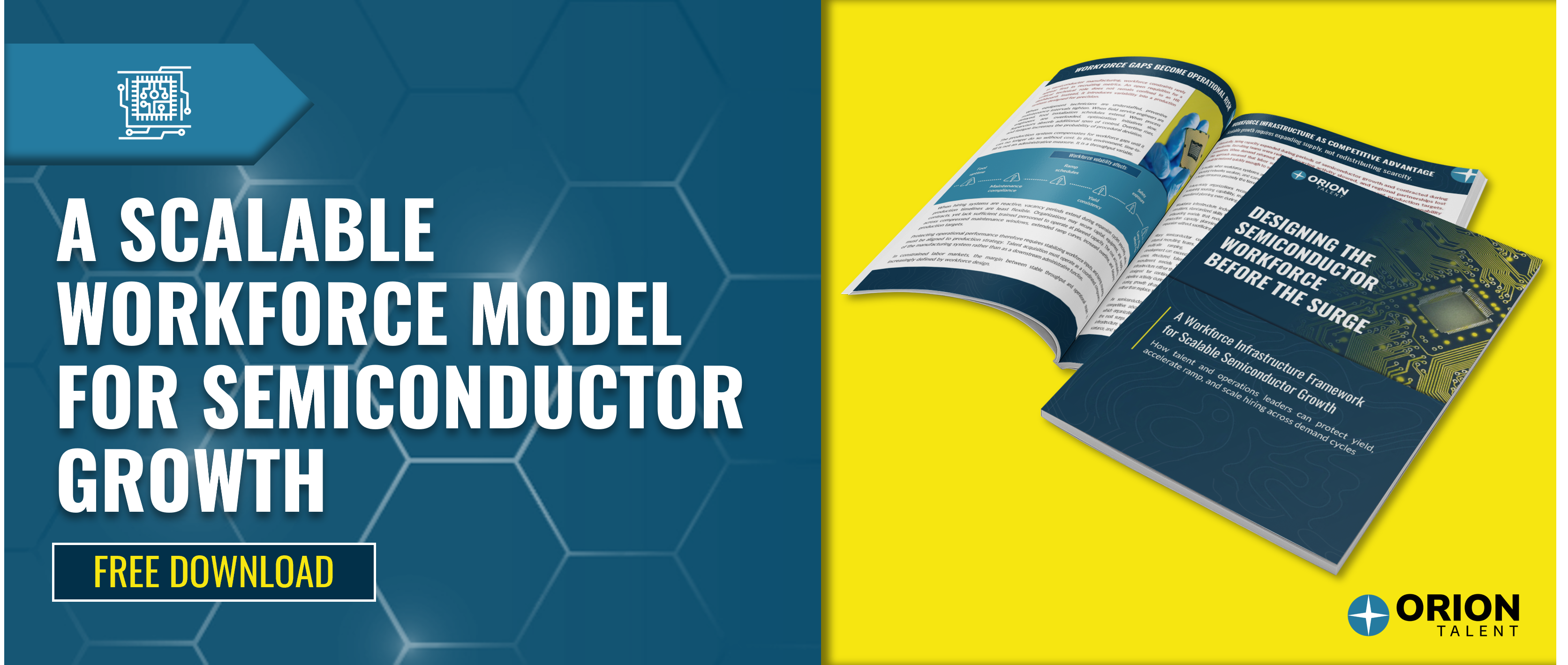
For leaders evaluating whether their current model is built to scale, we have developed a concise executive framework that outlines the structural components required for durable semiconductor workforce infrastructure.
Download the full framework here:
Workforce Infrastructure Framework for Scalable Semiconductor Growth
Archives
- July 2026
- June 2026
- May 2026
- April 2026
- March 2026
- February 2026
- January 2026
- December 2025
- November 2025
- October 2025
- September 2025
- August 2025
- July 2025
- June 2025
- May 2025
- April 2025
- March 2025
- February 2025
- October 2024
- May 2024
- March 2024
- February 2024
- January 2024
- December 2023
- November 2023
- October 2023
- September 2023
- August 2023
- July 2023
- June 2023
- May 2023
- April 2023
- March 2023
- February 2023
- January 2023
 RSS Feed